Hi Andy,
Welcome to the forum!
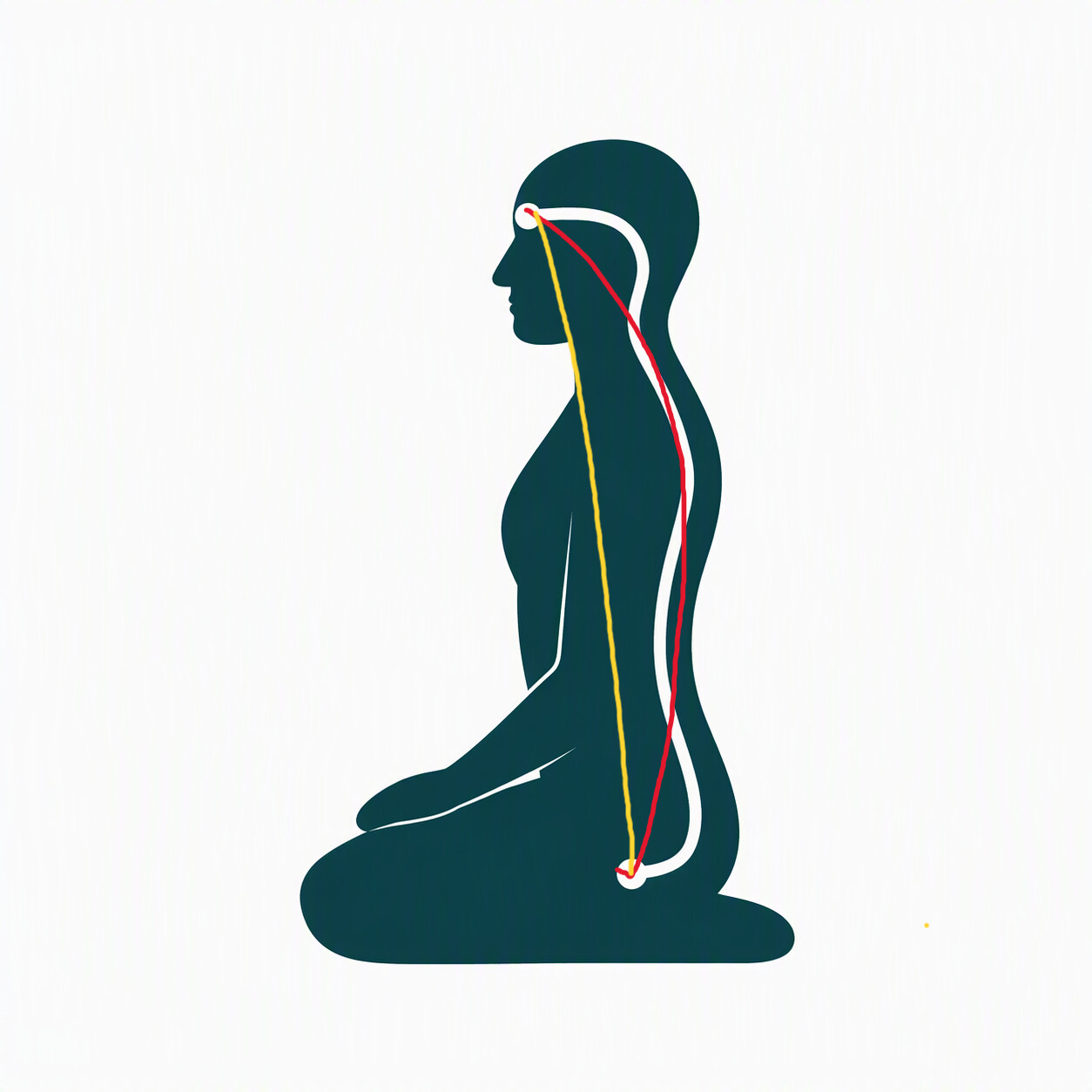
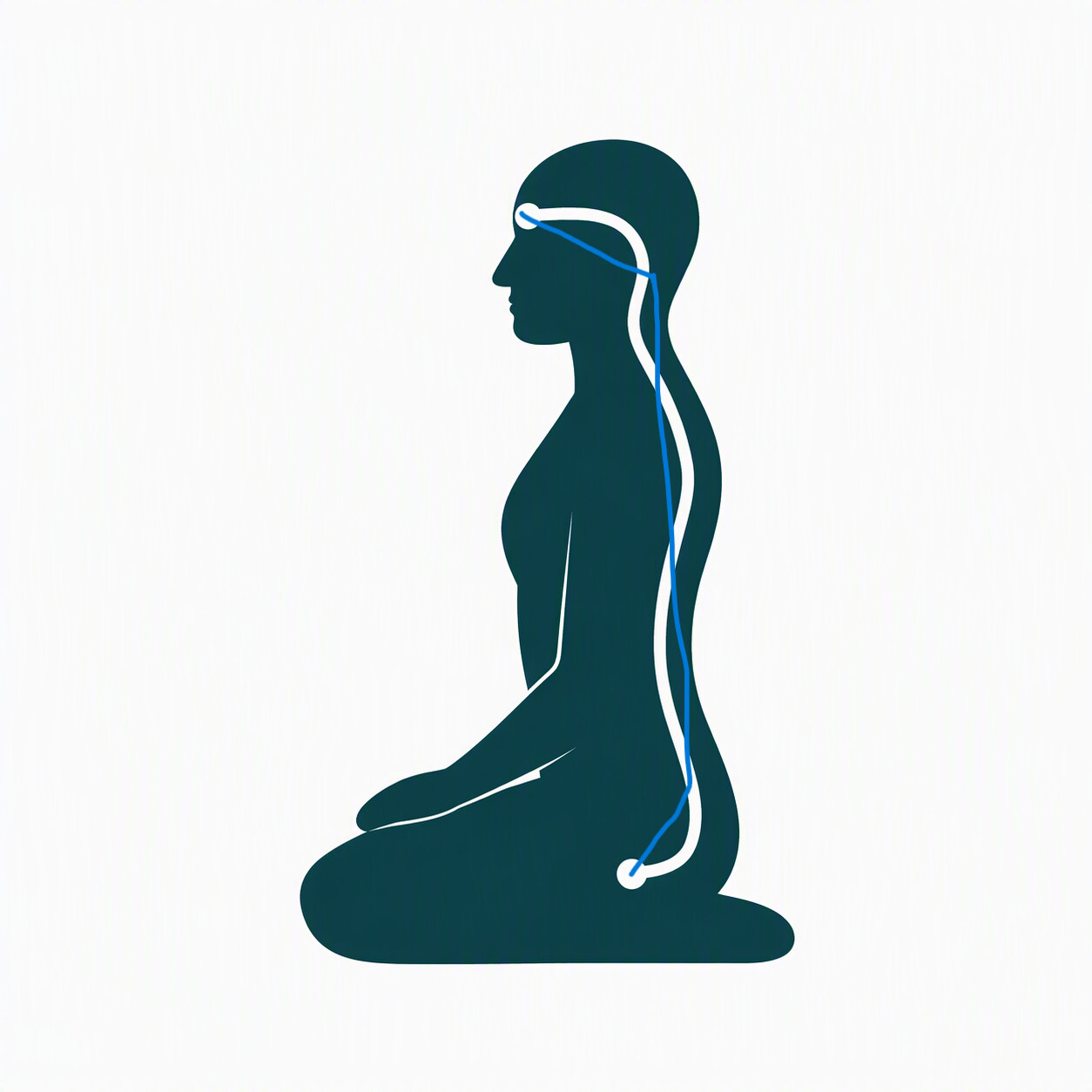
It is very common to have a “clunky stage” when learning spinal breathing pranayama. It can even persist for some time if we tend to be over thinking the process. So the suggestion is to be easy with it. If you are ending inhalation at the brow and ending exhalation at the root, then the rest in-between will naturally take care of itself as the subtle neurobiology purifies and adapts, as it surely will.
A more detailed discussion from the forum AI is included below. Your spinal breathing practice will evolve, and all is good.
The guru is in you.
AYP Forum AI: In Advanced Yoga Practices (AYP), difficulty with endpoint transitions during Spinal Breathing Pranayama (SBP) is very common, especially in the beginning stages. The instruction is to handle these transitions smoothly and effortlessly without causing mental tension.
Here is how to resolve this difficulty:
1. Don’t Micro-Manage the Turn
The original instruction for SBP describes inhaling from the perineum up the spine to the center of the head, and then making a turn forward to the center of the eyebrows. However, you do not need to visualize or force a precise, sharp physical turn.
Treating the path as a direct, smooth line or gentle curve between the root and the brow is completely valid. The mental image is only meant to “prime the pump”—trying to force exact geometric turns creates unnecessary mind clutter and friction.
2. Focus on Landing at the Endpoints
The primary rule of SBP is simply to end up at the center of the eyebrows at the end of inhalation, and at the perineum at the end of exhalation:
- At the top of the inhale: Allow your attention to arrive gently at the center of the eyebrows as your lungs fill.
- At the bottom of the exhale: Allow your attention to rest at the perineum as your lungs empty.
How you get back and forth in between or how you turn around is far less important than touching both ends in every breathing cycle.
3. “Jump” the Attention if You Get Stuck
If you experience a delay, awkwardness, or “clunkiness” when transitioning from the endpoints back into the spine:
- Skip over the stuck spot: Do not fight or analyze the obstruction at the endpoint.
- Jump your attention directly to the opposite endpoint as the breath completes its cycle.
By “playing both ends through the middle,” you clear the central channel (sushumna) from both directions simultaneously. Over time, the transitions will clear up naturally without any effort.
4. Allow the Shift from Imagination to Feeling
It is completely normal for SBP to go through a “clunky stage” where the mental movements feel unnatural. As you maintain a daily routine, mental visualization naturally gives way to a tangible feeling of energy (ecstatic conductivity) moving along the spine. Once this energy flow awakens, the transitions will become fluid, automatic, and pleasurable without requiring deliberate visualization.
5. Keep the Breath Continuous and Unforced
Ensure your breath is slow, deep, and relaxed through the nose. Do not deliberately hold or suspend the breath at the endpoints unless it happens naturally on its own. Let the end of the inhalation smoothly turn into the beginning of the exhalation, and vice versa.
 AI follow-up option: Would you like to explore how to add subtle sensory enhancements—such as tracing cool and warm currents—to help make the endpoint transitions feel more tangible?